Epiphany

6 January 2026 Sternsinger and C+M+B Nationwide Falls on: Tuesday

Epiphany on 6 January is a statutory public holiday in Austria. The day connects Sternsinger carol singers, house blessings, the end of the Christmas school holidays, taking down the Christmas tree and often very useful bridge days around the start of the year.

Practical

At a glance

Epiphany falls this year on Tuesday, 6 January 2026. 6 January is a statutory public holiday, the end of the Christmas school holidays and one of the most important custom days in the Austrian winter.

Date
6 January 2026
Falls this year on Tuesday.
Status
Nationwide public holiday
Epiphany is a statutory public holiday throughout Austria.
Custom
Sternsinger and C+M+B
Children and young people bring the house blessing and collect donations.
Bridge days
4 free days
1 day(s) of annual leave are enough this year for a longer block.

Epiphany in Austria is more than the last public holiday of the Christmas season. On 6 January, public-holiday rest, closed shops, Sternsinger dates, C+M+B, school start and the leave combination with New Year's Day all matter at the same time.

For many households, 6 January is the practical transition from the turn of the year back into everyday life. The Christmas tree is taken down, school holidays end, return travel happens and rosters start again. At the same time, the day remains culturally visible: Sternsinger groups are out, doors carry the house blessing, and in some families a king cake or shared meal belongs to the day.

That is why statutory public holiday, bridge days, labour law, transport, Sternsinger carol singing, C+M+B, Epiphany, Rauhnaechte and ideas for travel, gifts and baking belong together.

Holiday planning

Calculate bridge days

How to optimally use 6 January to build a long winter break with few days of annual leave.

1 day of annual leave = 4 days

4 free days with 1 day of annual leave

With one day of annual leave, you can build a long weekend around Epiphany.

Recommendation
Take Monday off
Block
3 January to 6 January 2026

Especially useful: in years like this, a free Monday connects 6 January with the preceding weekend. That makes 6 January a particularly good test case for annual leave: it lies early in the calendar, falls on a different weekday every year and can sometimes connect directly with New Year's Day.

Anyone working in tourism, care, transport or other public-holiday sectors should check public-holiday duty and supplements separately. For classic office and school rhythms, however, the period around 1 and 6 January is often one of the most efficient winter blocks.

Everyday life & Transport

Practical on 6 January

What you need to know about closed shops, public transport and leisure activities.

In everyday life, Epiphany resembles a classic statutory public holiday: regular retail rests, many offices remain closed and public transport often runs according to Sunday or public-holiday schedules. At the same time, the day is active in holiday regions because winter holidays, return travel and leisure offers coincide around the start of school.

The timing at the end of the Christmas school holidays is especially important. Anyone travelling with children should plan return travel, ski weekend and school start together. Anyone who wants to welcome the Sternsinger should also note that the groups are often out not only on 6 January itself, but already in the days before.

The reliable distinction is therefore: statutory public holiday, lived tradition and regional organisation. The public-holiday status is the same nationwide, but Sternsinger dates, Christmas tree collection points, tourism opening hours and return-travel pressure differ by municipality, federal state and holiday timing.

Anyone making plans should not look for local information only on the public holiday itself: many municipalities publish collection points, parishes publish Sternsinger dates and tourism businesses publish public-holiday hours in the days around New Year's Day.

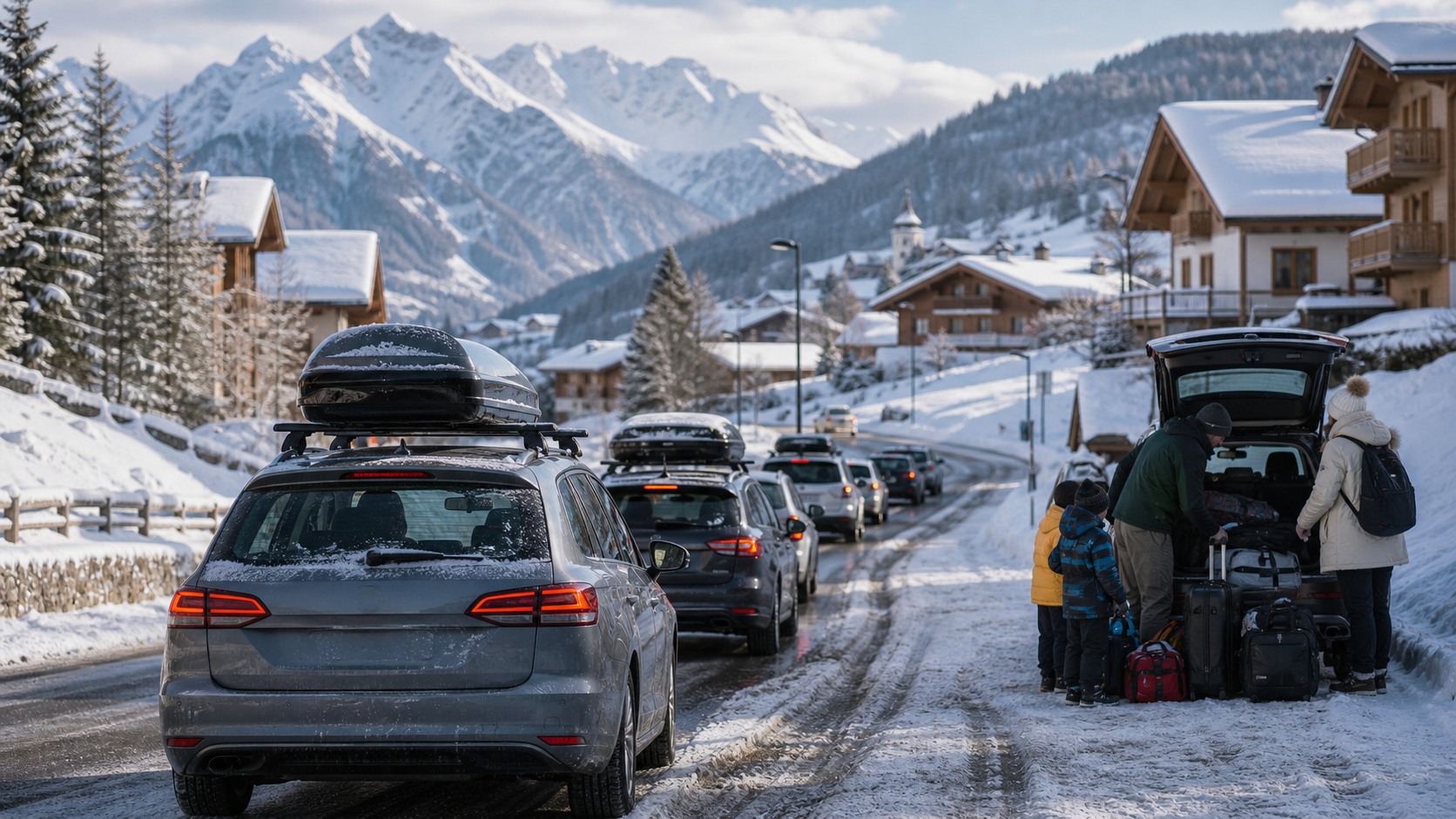
Winter return traffic at the end of the Christmas holidays in Austria

Work

Holiday rest

6 January is listed in the Working Rest Act as a statutory public holiday. Regular offices, many businesses and normal retail remain closed.

Shopping

Mostly closed

Supermarkets and many retail shops are generally closed on 6 January. Exceptions mainly concern travel and tourism locations.

School

End of holidays

Epiphany usually falls at the end of the Christmas school holidays. The first school day normally follows immediately afterwards or on the next Monday.

Transport

Return travel

Around the final holiday weekend, winter travel and ski routes can become busy. Timetables and traffic conditions should be checked close to the date.

Legal situation

Labour law

Why Epiphany is a statutory public holiday and what rules apply to working on this day.

Under labour law, the situation is clear: Epiphany is one of Austria's nationwide statutory public holidays. Under section 7 of the Working Rest Act, employees generally have a right to uninterrupted public-holiday rest and public-holiday pay. [1]

Exceptions exist in areas where public-holiday work is legally permitted, such as parts of healthcare, care, transport, safety, restaurants, hotels or seasonal tourism. Whether supplements, substitute rest or special rules apply depends on the collective agreement and the specific work.

Statutory public holiday

6 January is a nationwide public holiday in Austria under section 7 of the Working Rest Act.

Public-holiday pay

If work is cancelled because of the public holiday, there is generally a right to public-holiday pay under the loss-of-earnings principle.

Public-holiday work

Work on a public holiday is possible only in areas provided by law; details, supplements and substitute rest often depend on the collective agreement.

FAQ

Häufig gestellte Fragen

Is Epiphany a statutory public holiday in Austria?

Yes. 6 January is a nationwide statutory public holiday in Austria and is explicitly named in the Working Rest Act.

What does C+M+B on the door mean?

C+M+B is now usually interpreted as Christus mansionem benedicat, meaning Christ bless this house. The year is written around it, for example 20 C+M+B 26.

Are the Sternsinger really out on 6 January?

The Sternsinger are usually out in the days before 6 January and on Epiphany itself. The exact period depends on parish, town and organisation.

Are shops open on 6 January?

Regular supermarkets and many shops are generally closed on 6 January. Exceptions mainly exist at railway stations, airports, tourism locations and leisure businesses.

When is the Christmas tree traditionally taken down?

In many Austrian households, Epiphany is the practical date for taking down the Christmas tree. Some religious or regional traditions leave the tree standing longer.

Background and customs

The background explains Sternsinger, C+M+B, Epiphany, Rauhnaechte, Christmas tree and king cake and classifies what matters for family visits, church, bakeries and winter holidays.

Custom

Sternsinger and C+M+B

Why children dressed as kings go from house to house and what the blessing on the door means.

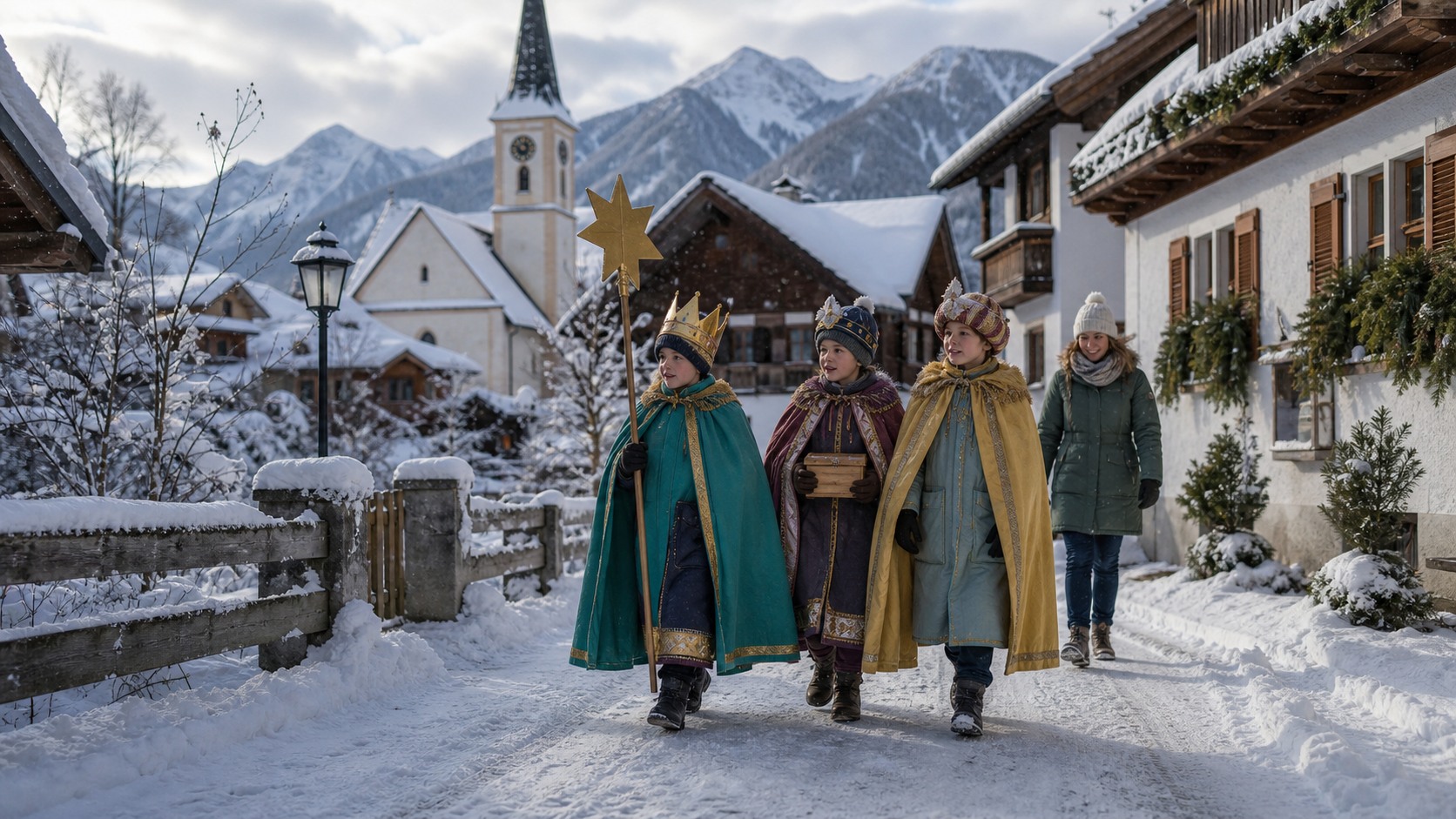
The Sternsinger are the most visible Austrian custom around 6 January. In many Austrian parishes, children and young people dressed as Caspar, Melchior and Balthasar move through streets, apartment buildings and villages. They sing, bring blessings for the new year and collect donations for aid projects.

The house blessing on the door is often written as 20 C+M+B 26, adjusted to the respective year. Many read the letters as the initials of the kings. The meaning commonly explained today, however, is Christus mansionem benedicat: Christ bless this house. This double character is exactly what makes the custom so distinctive: it is religious, social, regional and familial at the same time.

20 C+M+B 26

The year frames the blessing. The exact spelling can vary regionally.

Children dressed as Sternsinger walking through snow in Austria

Sternsinger

Children and young people go from house to house around 6 January, sing, bring the blessing and collect donations.

C+M+B

Today, the letters are usually interpreted as Christus mansionem benedicat: Christ bless this house.

Epiphany

Origins and meaning

Why the feast is older and more layered than the three familiar royal names.

The church name of the feast is Epiphany or the Manifestation of the Lord. It refers to Christ being revealed to the world. The story of the wise men from the East comes from the Gospel of Matthew. There, however, it does not speak of three kings, but of wise men or magi from the East.

The number three developed from the three gifts: gold, frankincense and myrrh. Only in later tradition were the figures interpreted as kings and connected with the names Caspar, Melchior and Balthasar. In this way, a biblical scene became a rich field of customs with star, crowns, song, blessing signs and house visits.

For Austria, this development is especially visible because the day is both a state public holiday and a living custom. Anyone who sees 6 January only as a day off misses its important social and cultural role at the end of the Christmas season.

Customs

Rauhnaechte and Christmas tree

Why 6 January is the end of the Rauhnaechte and the practical end of the Christmas tree.

In folk belief, Epiphany closes the Rauhnaechte. In many regions, smoking rituals, incense, house blessings and the last conscious threshold between Christmas season and everyday life are central. The day is therefore not only an ending, but also cleansing and restart.

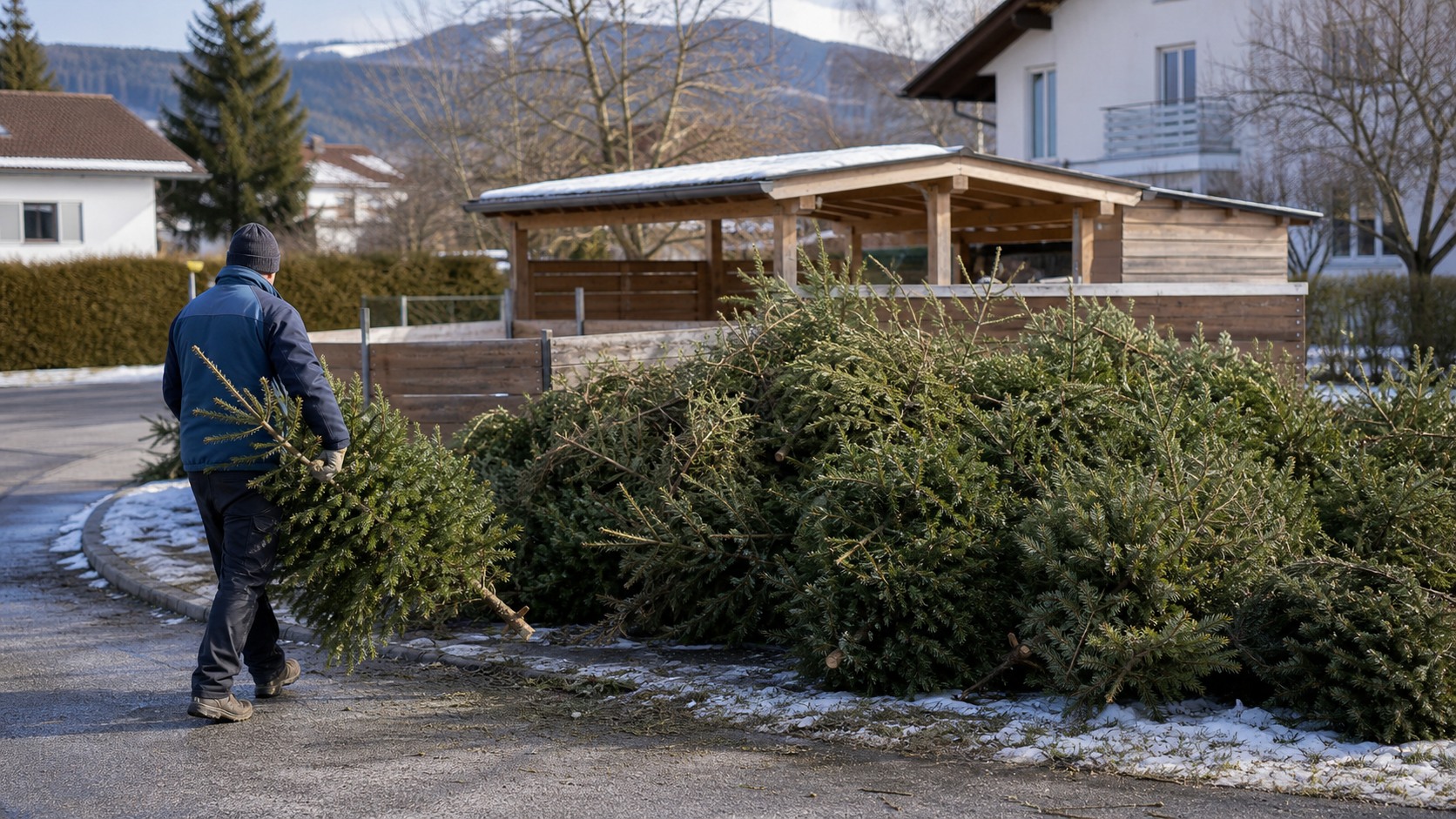
The Christmas tree is also very practical. In many households it is taken down around 6 January. Cities and municipalities organise collection points or pickup dates at this time. Removing tinsel, hooks and decorations makes disposal and further processing easier.

Discarded Christmas tree at an Austrian urban collection point after Epiphany

Rauhnaechte

In many stories, 6 January closes the Rauhnaechte. Smoking rituals, incense and house blessings belong to this transition.

Christmas tree

For many households, Epiphany is the practical date when the Christmas tree is taken down and disposed of.

Seasonal dishes

King cake

How the king cake works and why it fits perfectly with the family breakfast.

In culinary terms, king cake is the best-known reference point. Depending on the region, it consists of sweet yeast dough, several dough balls, almonds, sugar or a small hidden figurine. Whoever finds the figurine is king or queen for the day.

In Austria, the custom is not equally widespread everywhere, but 6 January works well for a quiet family breakfast, brunch or one last shared holiday day. Bakeries, pastry shops and cafes therefore often use the date for seasonal cakes or small promotions.

The king in the cake

A figurine, almond or bean is hidden in the cake. The piece found decides who is symbolically king or queen.

Easy to prepare

A cake from the bakery, a small baking set or paper crowns are often enough to turn the public-holiday breakfast into a memorable ritual.

Next steps

Plan next

Tools and links to efficiently plan the rest of the public-holiday year.

Quellen & Weiterführendes

  1. RIS - Working Rest Act section 7 : statutory holiday rest and list of nationwide public holidays in Austria.
  2. Chamber of Labour - public holiday rest : clear overview of public-holiday rest, public-holiday pay and public-holiday work.
  3. Dreikoenigsaktion - Sternsinger carol singing : official information on Sternsinger carol singing, donations and projects.
  4. Dreikoenigsaktion - background : context for Sternsinger carol singing, C+M+B and aid projects.
  5. Katholisch.at - Epiphany : church and Austrian context for the feast.
  6. City of Vienna - Christmas tree collection points : MA48 note on decorations, collection points and year-round drop-off at waste sites.
  7. City of Vienna - waste sites : official opening hours, addresses and drop-off conditions for Vienna waste sites.
  8. New Year's Day (1 January) : The public holiday with which 6 January is often combined for leave planning.
  9. School holidays in Austria : Check Christmas school holidays and school start by federal state.